



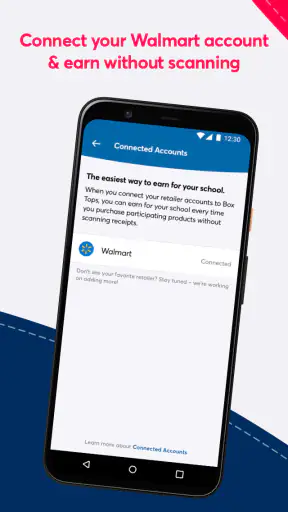
Box Tops for Education™ is a shopping app with a very focused purpose: it turns eligible grocery purchases into support for a participating school. I like that narrow mission because it gives the app a job beyond helping me find products or compare prices. Instead of treating shopping rewards as something I keep entirely for myself, it connects ordinary household spending with a school community.
That idea is simple, but the usefulness depends on how consistently I remember to use it. The app is free, aimed at Everyone, and developed by General Mills, Inc. It has built a sizeable audience, with more than a million installs and an average rating of 4.2 from roughly nineteen thousand ratings. Those figures suggest that the concept is easy for many families to understand, although they do not remove the need to pay attention during the shopping routine.
One capability that changes the purpose of a grocery trip
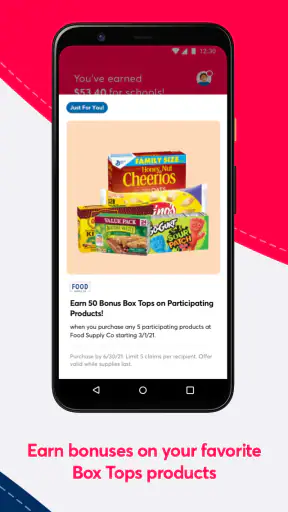
The central capability is earning cash for a school through qualifying purchases. In my experience, that is the part worth evaluating most closely, because it changes the app from a conventional coupon wallet into a small participation tool. The benefit is not an instant discount at checkout. The value is that a purchase can contribute to a school after the shopping step is completed properly.
That difference matters. If I am looking only for the lowest total at the register, a normal supermarket loyalty program or a coupon app may be more direct. Box Tops for Education™ is better suited to someone who wants their regular grocery choices to have a local educational benefit. It asks me to think beyond the price of one item and consider whether the product I am already buying can support a school I care about.
The strongest part of this model is that it does not require me to plan an entirely separate fundraiser. A parent can use it while buying breakfast items, snacks, or household groceries that are already on the list. A relative who does not have children at the school can also take part if they want their shopping to help that community. The app therefore works best when it becomes attached to an existing habit rather than treated as a special event.
There is also an important emotional difference between this and a personal rewards balance. A personal points program encourages me to save toward a discount or redemption. Here, the reason to keep using the app is shared benefit. That makes it especially appealing for families who want a practical way to involve grandparents, neighbors, or other supporters without asking them to organize a fundraiser themselves.
What the app is really asking me to do
The store summary makes the idea sound effortless, but the useful interpretation is more specific: I still need to shop thoughtfully, identify qualifying products, and complete the app’s process accurately. The app does not make every grocery purchase automatically meaningful. Its value comes from the small amount of attention I give to the transaction.
I would describe the experience as a bridge between shopping and school fundraising. It is not a supermarket replacement, a full budgeting system, or a general-purpose savings service. That distinction helps set expectations. If I open it expecting a broad marketplace or a constantly changing collection of personal deals, I may find the experience too specialized. If I open it because I want to support a school through routine purchases, the limited focus becomes a strength.
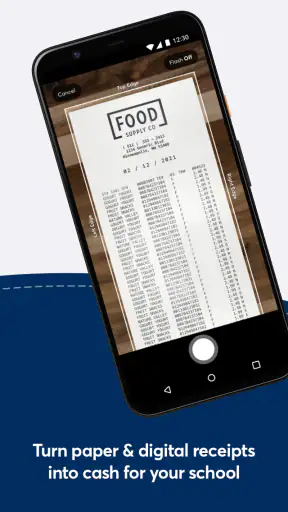
The most important habit is checking the app before treating a purchase as a contribution. I would not assume that an item qualifies simply because it belongs to a familiar grocery brand or because it seems related to school supplies. The practical discipline is to use the app as the reference point, then keep the shopping record or receipt information available until the transaction has been handled as required.
How I would use it during a normal shopping week
A realistic routine starts before leaving home. I would open the app while making the grocery list and look for products that fit the meal plan rather than adding random items just to chase a reward. This is a subtle but important trade-off: the app should follow my household’s needs, not dictate them. If I buy something nobody will use, the school benefit is weakened by unnecessary spending.
Once I know which planned purchases may qualify, I would keep the app in mind while shopping. I would compare the relevant product details carefully instead of relying on a quick glance at packaging. Similar products can differ by size, variety, or format, so a familiar logo is not enough reason to assume that every version has the same treatment. This is one of the places where a few seconds of checking can prevent disappointment later.
After checkout, I would complete the required submission process promptly rather than leaving it for the end of the month. Delaying creates two practical problems: I may forget what I bought, and I may misplace the receipt or other information needed to document the purchase. A simple workflow is to finish the app task while the receipt is still in my hand, then store the receipt until the contribution has been reflected as expected.
Families can make this easier by assigning one person to manage the routine. In a busy household, several people may shop independently, and duplicated effort can become confusing. A shared agreement—such as one person handling submissions and everyone else placing receipts in one spot—turns the app into a repeatable process rather than a series of uncertain attempts.
Another useful approach is to create a short pre-check list for recurring purchases. For example, I might note the breakfast products or snacks my household buys often, then revisit that list when the app’s eligible selection changes. This avoids browsing the entire grocery aisle with a phone in hand and reduces the temptation to buy something solely because it appears connected to a reward.
Why timing and organization matter
The app’s concept is easy, but the administrative side is where many users will decide whether it is worth continuing. A person who completes each step immediately may find the process light. Someone who shops in several stores, shares receipts with relatives, or waits until the end of a busy week may experience more friction.
I would also keep the purpose of each receipt clear. If a receipt contains both qualifying and ordinary items, I would not assume the whole transaction earns support. The safer mindset is to identify the relevant purchase rather than treating the receipt as a single reward unit. That small change in thinking makes the process more accurate and helps avoid inflated expectations.
For a school group, the app can become more effective when supporters agree on one school destination and use the same routine. The strength comes from many ordinary purchases accumulating around one shared goal. Without that coordination, individual users may still contribute, but the community aspect is less visible and the habit is easier to abandon.
The best everyday scenario
The clearest use case for me is a family that already buys qualifying grocery products every week and has a direct connection to a school. Imagine a parent preparing a regular supermarket list on a Sunday evening. The list includes familiar breakfast items and snacks for the children. Before shopping, the parent checks which planned products can support the school, then handles the app step after returning home while the receipt is still available.
Nothing about that routine requires a separate fundraising night, a new subscription, or a special trip. The family is not spending extra merely to create a contribution. They are giving existing purchases an additional purpose. That is where the app feels most persuasive: it can fit into a normal week without asking the user to become a full-time fundraiser.
The scenario becomes even more useful when relatives participate. A grandparent may shop for a household in another neighborhood, while an aunt may buy the same types of products for her own family. If they are connected to the same school effort, their individual shopping habits can support a common destination. The app’s value then comes less from one person’s purchase and more from making participation easy to repeat across a small network.
I would not recommend changing a family’s diet or buying habits just to increase the school contribution. That defeats the practical advantage. The better strategy is to identify products that genuinely belong on the list, compare them with suitable alternatives, and use the app when the choice remains sensible. A school benefit is worthwhile, but it should not turn a routine grocery decision into unnecessary spending.
This scenario also shows why the app may appeal to people who dislike traditional fundraising. Some users do not want to sell items door to door, ask friends for donations, or manage a public campaign. A shopping-linked contribution feels quieter and more private. It lets them help through a task they already perform, which may be more comfortable for families with limited time.
When the model is less useful
The app is less compelling for someone who rarely buys eligible grocery products, does not have a school they want to support, or prefers immediate savings at checkout. In those cases, a supermarket loyalty account or a coupon-focused app may provide a clearer personal return. Box Tops for Education is not designed to replace every other shopping tool; its advantage is the school connection.
It may also be a poor fit for a household where several people shop but nobody wants responsibility for receipts and submissions. The contribution model depends on follow-through. If the process is repeatedly forgotten, the app can become another icon on the phone rather than a useful part of the household routine.
Trade-offs I noticed before recommending it
The first trade-off is attention versus impact. The app can make ordinary shopping more meaningful, but it does not remove the need to verify products and complete the relevant steps. Users who want a completely automatic experience may find that expectation unrealistic. I see the required attention as manageable, but only if the household builds it into the shopping routine.
The second trade-off is community value versus personal savings. A coupon app may reduce my bill immediately, while this app directs the benefit toward a school. Neither approach is universally better. If my budget is under serious pressure, I would prioritize the option that gives me the most direct reduction. If I can make the same sensible purchase while helping a school, the shared benefit makes Box Tops more attractive.
A third trade-off is flexibility. The app’s focused purpose makes it easy to understand, but it also means I should not expect it to organize my entire grocery life. I would still use a normal shopping list, a store’s loyalty program, or a price-comparison method when those tools solve a different problem better. Combining tools can be sensible, provided I do not lose track of which benefit belongs to which purchase.
There is also a social trade-off. The app can encourage families to talk about school support in a practical way, but the experience may feel less rewarding if the user has no visible connection to the school receiving the benefit. Someone who enjoys personal rewards may not feel motivated by a contribution that is shared or indirect. That is not a flaw in the concept so much as a question of what kind of reward keeps a person engaged.
I would pay attention to the app’s maintenance as well. The current version is 4.182.0 (2026082602), and it requires at least Android 10. That makes the app a reasonable choice for users with a relatively current Android device, while people using older phones should check compatibility before building their routine around it. The app is free, but “free” here describes the download; the real cost is the time spent checking, recording, and submitting purchases.
The Everyone age rating makes it approachable for a broad household audience. Still, I would have an adult manage the practical details when children are involved, especially if receipts, school selection, or account information are part of the process. The app may be family-friendly without making every administrative task equally suitable for a young child.
Three habits that make the experience better
- Check before shopping, not only after checkout. This helps me choose among products already on my list and prevents the app from encouraging unnecessary purchases.
- Finish the submission while the receipt is easy to find. A same-day routine is more dependable than collecting a pile of receipts and trying to reconstruct several shopping trips later.
- Coordinate household shoppers. One shared place for receipts and one person responsible for the final step reduces duplicate submissions, forgotten purchases, and confusion about which school should benefit.
These habits are not flashy features, but they are the difference between occasional good intentions and a contribution routine that actually lasts. In particular, checking first protects the household budget, while prompt submission protects the effort already spent shopping.
Who gains the most from using it
I think the strongest audience is a family with a participating school in mind, regular grocery shopping, and enough routine to handle one extra step. Parents who already plan meals and keep receipts are especially well positioned because the app can attach itself to habits they already have. The same is true for grandparents and relatives who want a low-pressure way to support a child’s school.
It is also a good fit for school communities that can encourage consistent participation without making users feel pressured. A handful of people using the app once may not create the same effect as many households quietly repeating the process. The app works best when the social message is practical: check your planned purchases, submit them correctly, and let normal shopping contribute over time.
I would be more cautious recommending it to a person whose main goal is aggressive price hunting. If every shopping decision is based on the lowest possible total, a direct coupon or store reward may deserve priority. I would also hesitate for anyone who dislikes receipt management or frequently shops without knowing what was purchased. The app rewards consistency more than enthusiasm.
For Android users, the platform requirement is another simple screening point. Anyone on Android 10 or newer can consider it within the stated compatibility range, while users of older systems should not assume it will fit their device. Since the app is available at no purchase price, the main decision is not whether to pay for access but whether the school-focused workflow matches the way the person shops.
General Mills, Inc. has kept the product centered on a recognizable consumer action: shopping for groceries and connecting that activity with school support. With its established user base and thousands of written reviews, it clearly has staying power as a shopping app, but I would still judge it by personal fit rather than popularity. A large audience cannot make an inconvenient routine convenient for everyone.
My final view is positive, with a clear condition. Box Tops for Education™ is worth trying if I already buy suitable groceries and want those purchases to help a school. Its best quality is not that it transforms shopping; it is that it gives a familiar task a second purpose without demanding a separate fundraising project. The limitation is equally clear: I must pay attention, verify what counts, and complete the process instead of assuming the benefit happens automatically.
If that small amount of organization feels reasonable, the app can become a quiet, repeatable way to support education. If I need immediate personal savings, broad shopping comparisons, or a fully automatic rewards experience, another shopping tool will probably serve me better. For families and school supporters who value shared impact over instant discounts, however, this is a focused and practical addition to the grocery routine.


